A $199 ball feeder and a $575 bowling machine do different jobs. Compared on pace, distance, swing and the ball each one takes — and what none of them can do.
Three machines, and the gap between the cheapest and the dearest is not simply 'better'. A feeder drops a ball in front of a batter from a few metres away. A bowling machine fires one at close to bowling pace from the other end. They suit different sessions, and buying the wrong one is an expensive way to find out.
One thing applies to all three, and no manufacturer leads with it: they take a 60 g PU ball, not a cricket ball. If facing the real thing matters, that is a ball thrower's job, not a machine's.
Start with the distance you have
If you are working with juniors in a hall or a back garden, the throw is short and the pace is low: a feeder is the tool, and the cheaper one does it. If you have a full-length net and want a batter genuinely hurried, you need a bowling machine. The middle option earns its money on the two things a plain feeder cannot do at all — swing and spin.
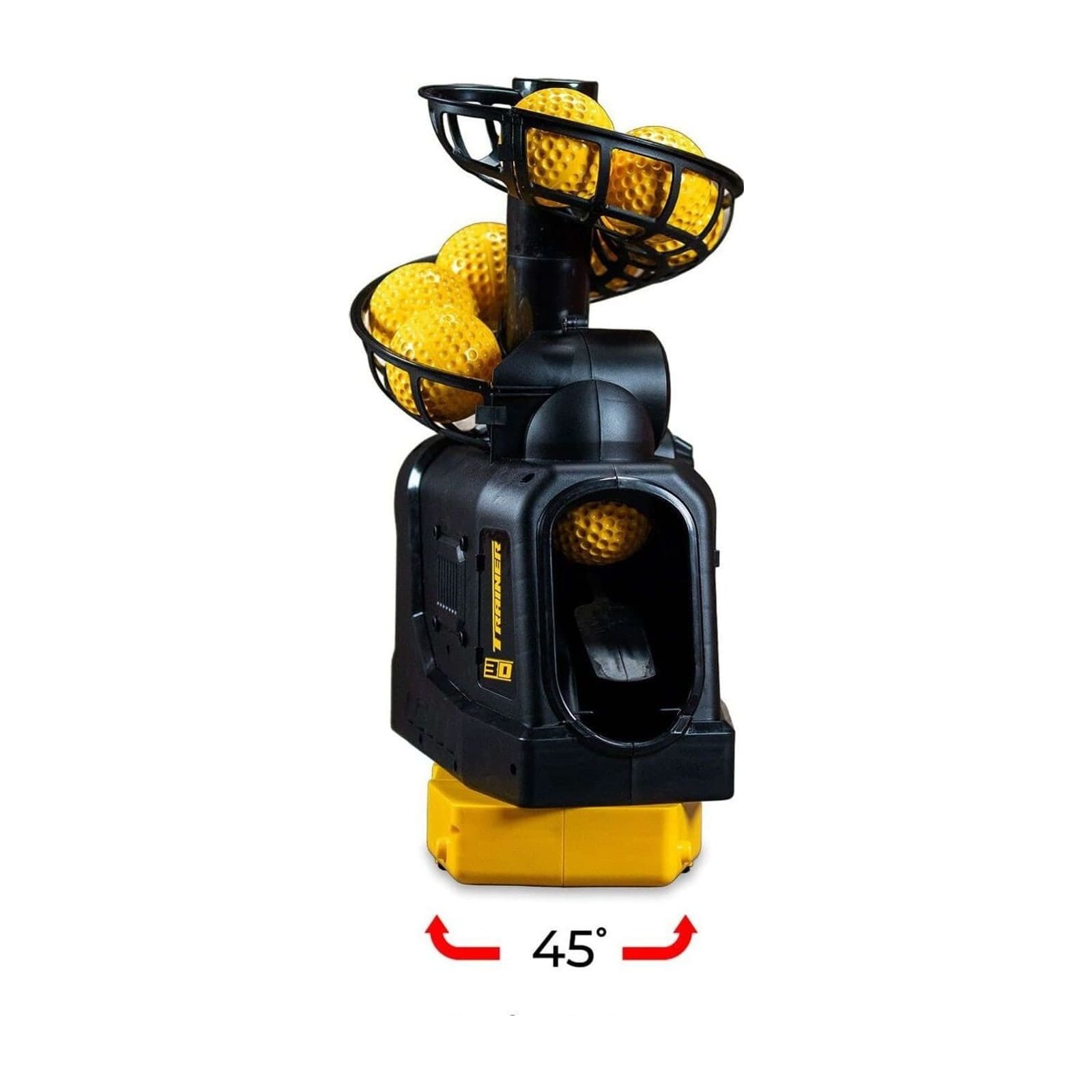
Buy it for: Juniors, indoor sessions and technique work. It feeds every five seconds from 3–7 m, takes tennis balls as well as PU, and runs on batteries so it does not need a power lead in a back garden.
Not for: Anyone wanting the ball to move in the air, or to face it from a full length. It has no swing and no spin.
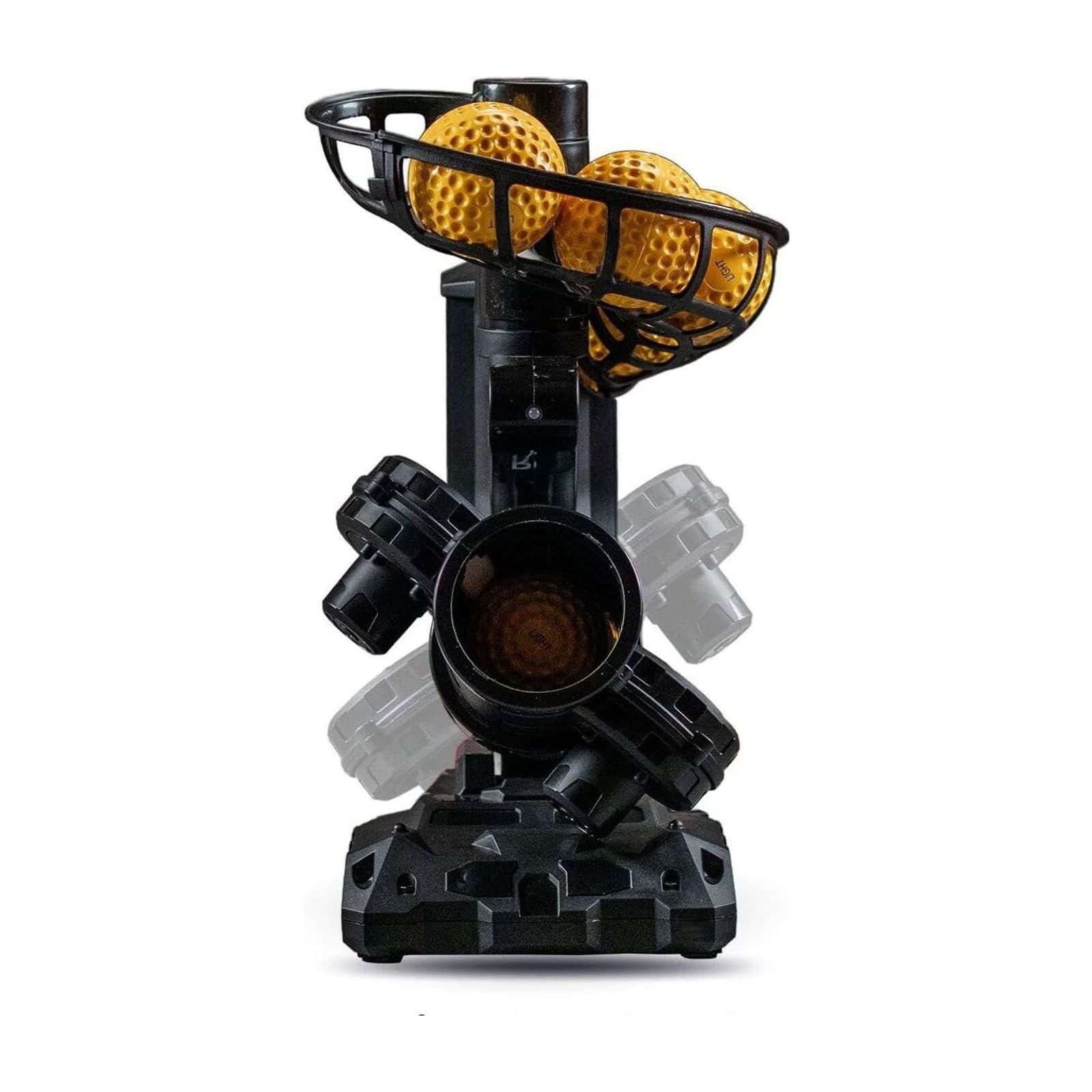
Buy it for: Coaches who want variation without a bowling machine's price. It reaches 17 m, adds swing through a rotating feed outlet and spin, has a pre-release light so the batter can time their trigger, and it is lighter than the standard Trainer.
Not for: Sessions using tennis balls — it takes 60 g PU only. Check that before you buy the balls to go with it.
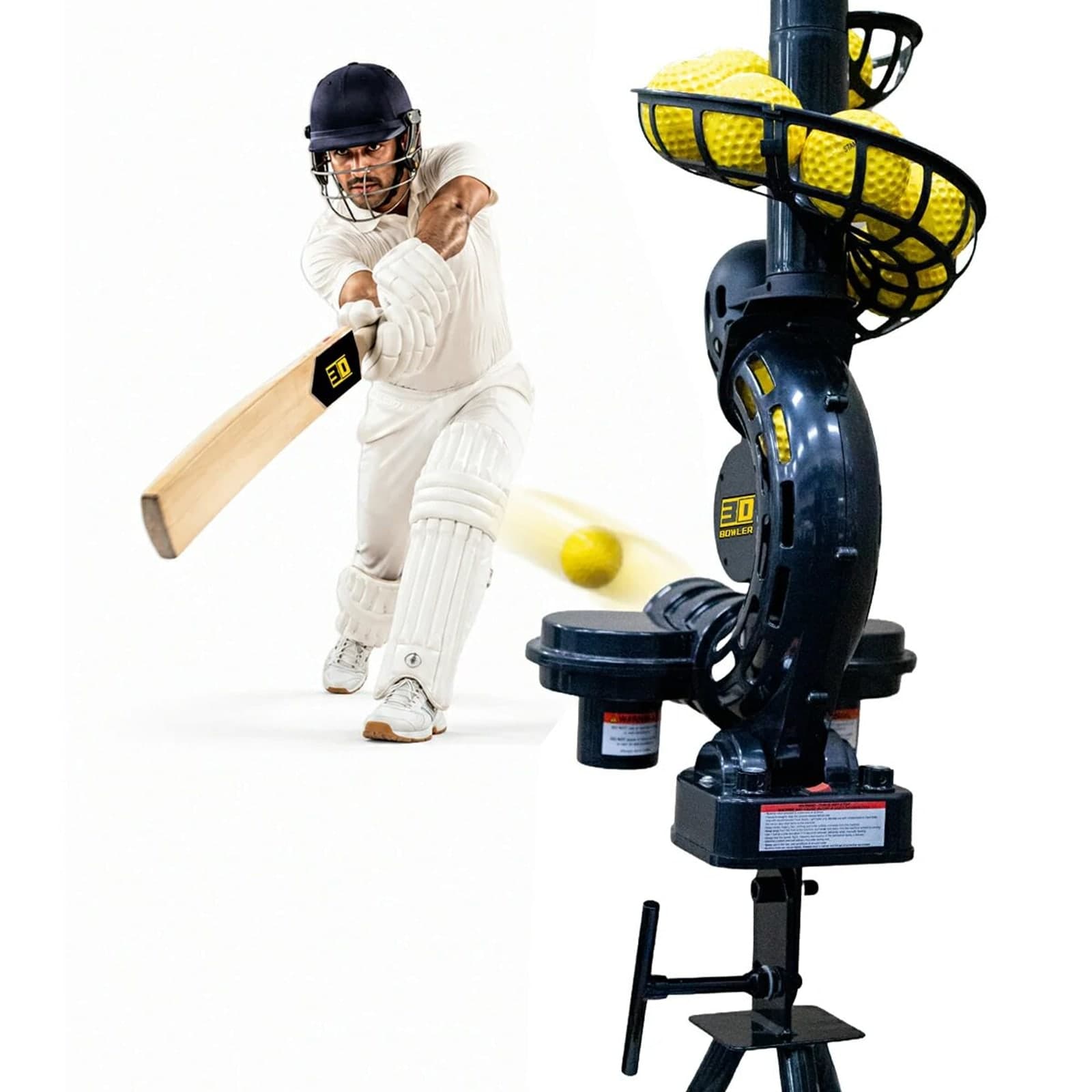
Buy it for: Club nets and academies. Two independently controlled wheels give in-swing and out-swing at up to 100 kph, with an auto feeder so a coach is not loading every delivery by hand.
Not for: A back garden, or a first purchase for a parent. At this pace you want a proper net and someone who knows how to set it.
What is the difference between a ball feeder and a bowling machine?
A feeder presents a ball from a short distance at low pace — its job is repetition, so a batter can groove a shot. A bowling machine propels the ball between wheels from a full length at something near bowling pace, so the batter has to react. The 3D Trainer and Trainer Pro are feeders; the 3D Bowler is a machine.
Can a bowling machine use a real cricket ball?
Not these. All three take a 60 g PU ball, which is lighter than a regulation 156 g cricket ball and behaves differently off the surface. A RapidArm+ ball thrower is the option that throws an actual cricket ball.
Do they need mains power?
No. The 3D Trainer and Trainer Pro both run on four D batteries with mains power as an option, so they work in a back garden or on an outground with no power.