Which cricket training tool do you actually need?
Getting a batter quality practice without a fast bowler on hand comes down to four options: throw by hand, use a ball thrower, let a feeder do the work, or face a bowling machine. They do genuinely different jobs, and the dearest one is not automatically the right one.
| By hand | Ball thrower | Ball feeder | Bowling machine | |
|---|---|---|---|---|
| What it does | You throw | You throw, with more speed | Feeds a ball on a timer | Bowls at you |
| Ball speed | Limited by your arm | 100–160 kph | Up to 60 km/h on the Pro | Up to 100 km/h |
| Ball it uses | Any cricket ball | Any cricket ball | 60 g PU or tennis | 60 g PU light balls |
| Someone feeding it | Every ball | Every ball | 10-ball hopper | 10-ball auto feeder |
| Power | None | None | 4 × D batteries | Batteries or mains |
| Swing | If you can bowl it | Yes — the cup grips the seam | Yes on the Pro | In-swing and out-swing |
| Price | Free | $99.95 | $199–$280 | $575 |
| Best for | Young players, warm-ups | Match pace without the technique | Solo practice, fielding and keeping | Facing swing over and over |
Prices and figures are for the equipment we sell. Full-size academy machines are a separate category — see below.
Throwing by hand
Free, and fine for younger players. But an arm tires, accuracy drifts as it does, and it tops out well below match pace. An hour of throwdowns is also hard on a shoulder, which is the main reason people who do it every week use a tool.
A ball thrower
A thrower lengthens your arm, so the ball leaves faster with far less effort, and a good one grips the seam so the delivery still swings. It is the only option here that throws a real cricket ball— feeders and light-ball machines use 60 g PU balls, which behave differently off the pitch and off the bat.
The thing to compare between throwers is how much technique they demand. Basic ones reward a practised action, and in unpractised hands the ball sprays. The RapidArm+ was built around that problem: the moulded cup grips the ball the way a bowler's fingers do and releases it cleanly, so a parent or a part-time coach gets consistent deliveries almost straight away. Four steel-screw settings take it from 100 kph to 160 kph, and seven cup angles change the trajectory from a skidding yorker to steep bounce off a length.
What it will not do is bowl without you. Every ball still needs a person.
A ball feeder
A feeder is the answer to a different question: how do you practise when nobody is available to throw? Load the hopper and it delivers a ball every few seconds, on its own, while you bat. It is just as useful pointed at a fielder — the same machine gives catching and wicket-keeping practice that normally needs a coach.
Ours weigh 1.2–1.9 kg and run on batteries, so a feeder genuinely does go to the park in a kit bag. The step up to the Trainer Pro adds swing, spin and a pre-release light so a batter can work on timing rather than just contact.
A bowling machine
A machine is what you want when the point is repetition against a specific delivery: the same length, the same movement, thirty balls in a row. Two wheels under independent control mean it can swing the ball in and out at up to 100 km/h, and a ten-ball feeder keeps it going without someone standing over it.
The honest trade-off is the ball. A light-ball machine like the 3D Bowleruses 60 g PU balls, not a 156 g match ball, so it is superb for grooving timing and shot selection and it is not the same as facing the real thing.
What about academy machines?
There is a category above all of this: full-size machines that fire a genuine cricket ball at first-class pace. They are what state academies and first-grade clubs use, they typically run into the thousands, and they need mains power, setup time and a vehicle to move. Indicative market range, not any specific product: roughly $2,000–$8,000 AUD.
We do not sell those, and for most clubs and every parent they are the wrong tool for a Tuesday evening. If your players need to face a hard ball at that speed regularly, that is the category to look at — not this one.
So which one?
- You want match pace with a real ball, cheaply: a ball thrower.
- Nobody is available to throw: a feeder.
- You want to face swing again and again: a bowling machine.
- You are drilling fielding or keeping: a feeder, pointed at the fielder rather than the batter.
Plenty of clubs end up with two: an arm in every coach's kit bag, and one machine that lives at the nets.
Try it before you decide
Our free browser game uses the real adjustments — pick a speed setting and a cup angle and watch what each one does to the delivery. Two minutes, and it is the quickest way to understand what a thrower actually changes.
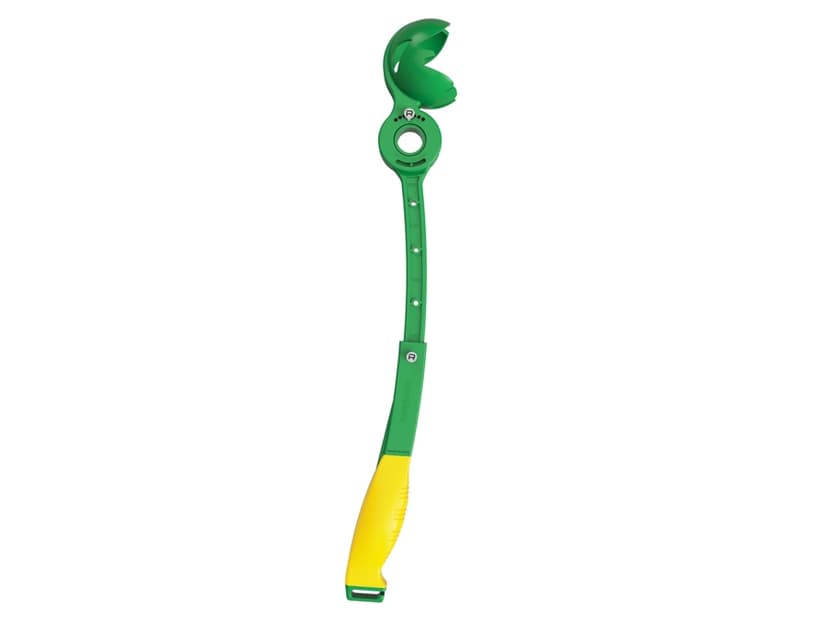
RapidArm+ — $99.95 AUD
100–160 kph · 7 cup angles · takes any cricket ball · 12-month warranty
View the product